Below the team shares some of their reflections from the project.
Hương Ngô
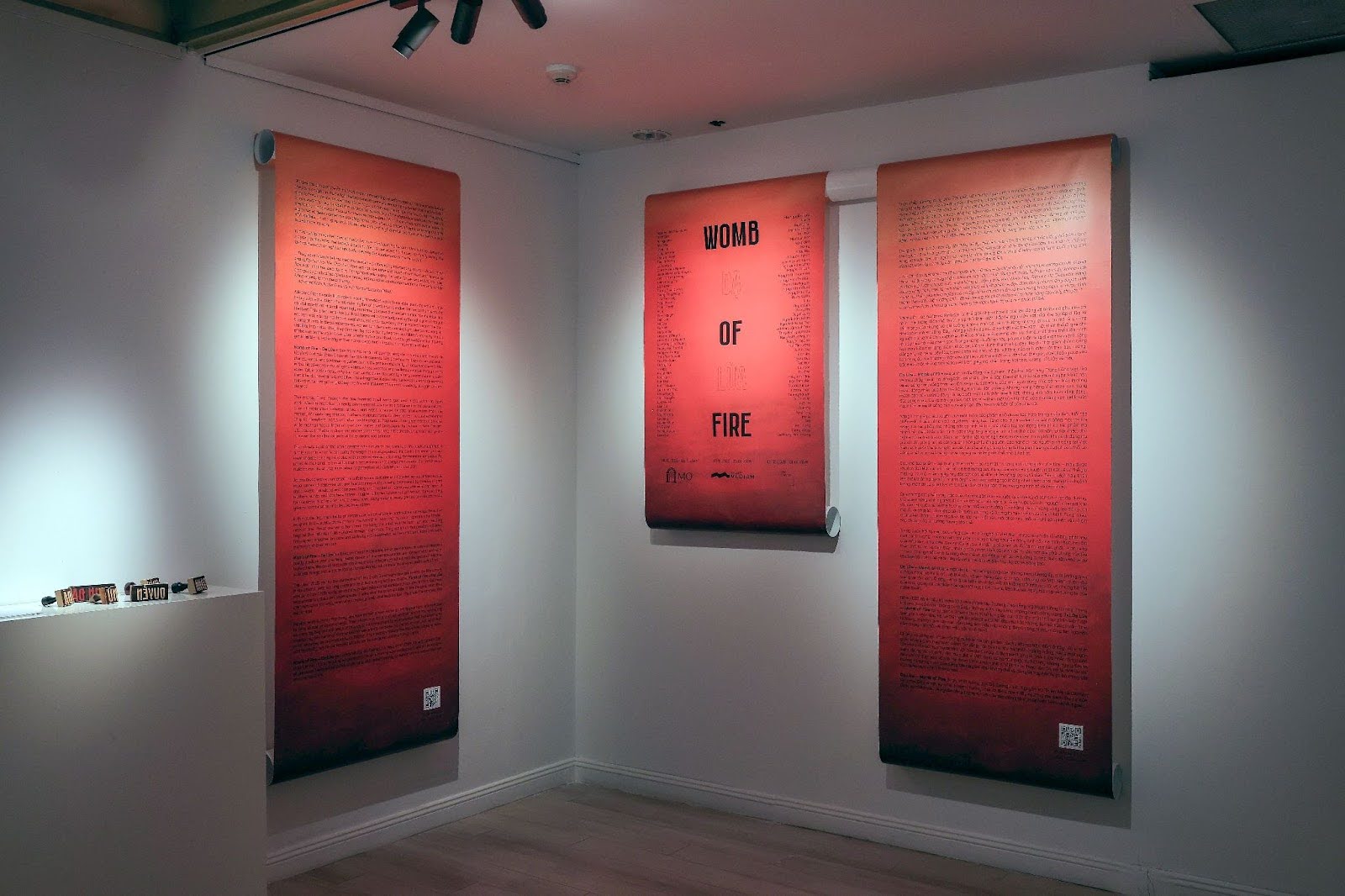
The sharing of information and experiences across borders was a hope of the recent exhibition Dạ Lửa (Womb of Fire), a survey featuring 100 works by Vietnamese and diasporic Vietnamese women and non-binary artists. The exhibition was curated by Đỗ Tường Linh, with the support of Nguyễn Vũ Thiên An and Carmen Cortizas and opened at Mơ Artspace in Hanoi (October, 2025), then traveling to Ho Chi Minh City to Vin Gallery and Gallery Medium (December, 2025).
I participated in the exhibit as an artist and traveled for the opening at Vin Gallery and Gallery Medium, joined by Astrid Reza and Nguyễn Thị Minh. The stated focus of the exhibition was on researching, archiving, and presenting diverse artistic practices. A question that circulated amongst artists, visitors and the curators was, “Why is this curatorial category urgent or generative right now?”
From my perspective, while Vietnam is unified, Vietnamese people are spread around the world. Looking to women’s magazines as a model for a site of exchange and solidarity, Dạ Lửa might therefore be a rare shelter to find community, not only through acknowledge what we share, but also in how we differ.
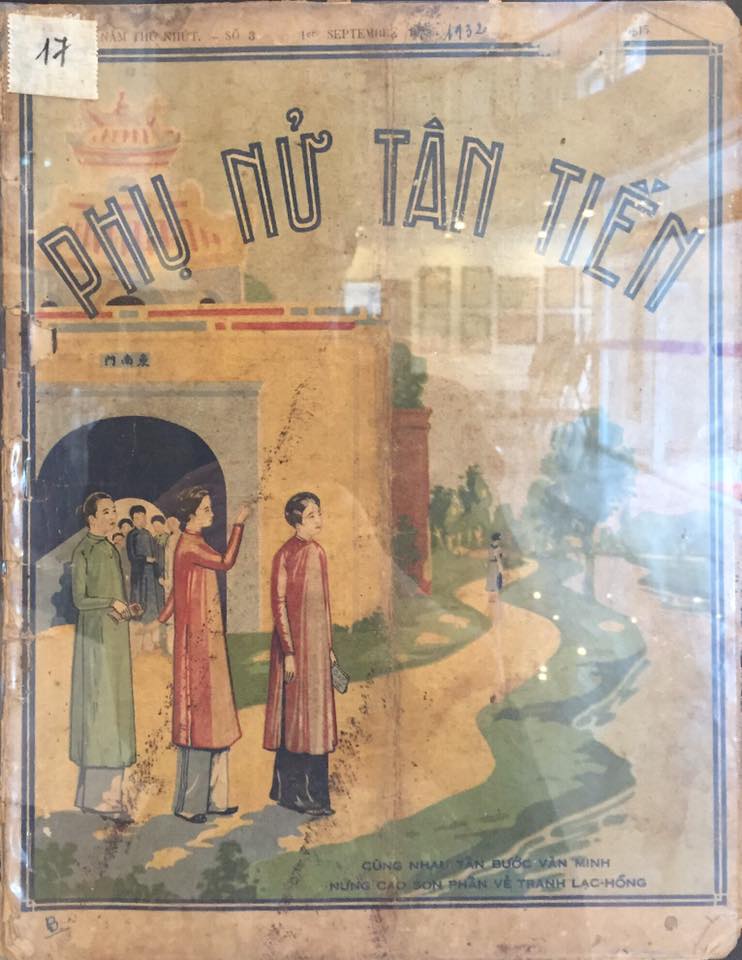
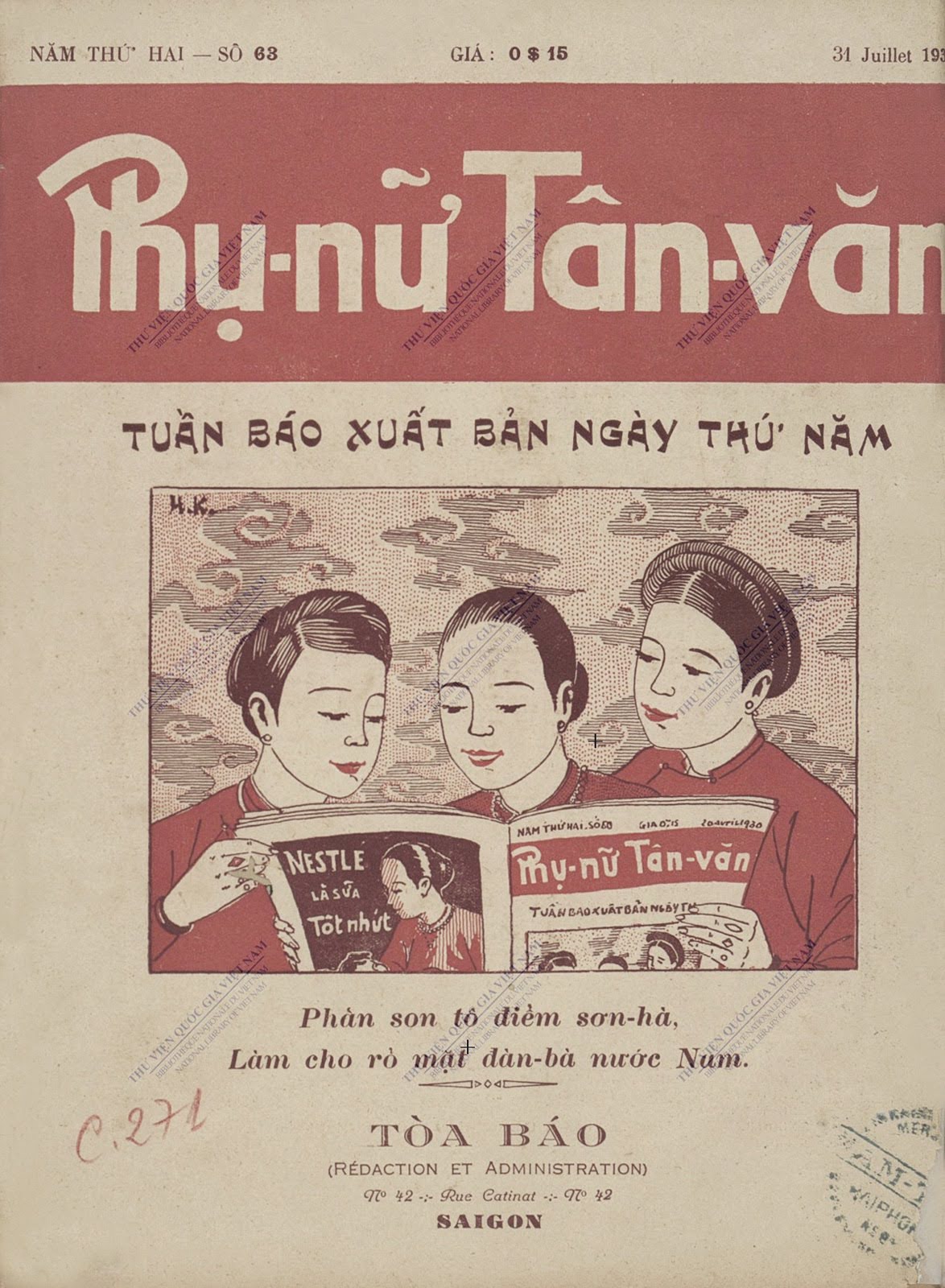
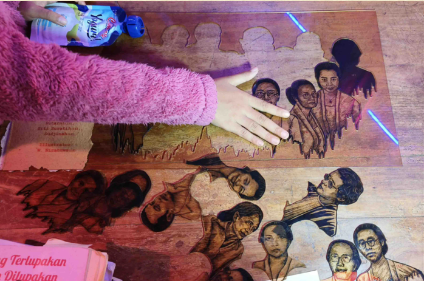
I’m reminded of the covers of Phụ nữ Tân tiến and Phụ nữ Tân văn above, which featured women from north, central, and south Vietnam. Each illustration imagines a gathering of these women. The reality of that gathering, then and now, is much more difficult and complicated, whether due to practical limitations, emotional barriers, or conceptual differences. The press release on the website of Mơ Artspace nods towards such absences, perhaps also a new perspective on archival silences that we encounter in the history of exiled women that we pursue:
“We also wish to honor the many luminous women whose works do not appear here, whether due to time, space, or circumstance. Their absence is not a void but another kind of fire, simmering with energy beyond the reach of this project. It is important to acknowledge that there are by no means only one hundred Vietnamese female artists, nor does this gathering imply a fixed criterion of who may be counted as such. Rather, it is a gesture toward the boundless scope of women’s creativity, which cannot and should not be contained within a formal canon.”1
Astrid Reza
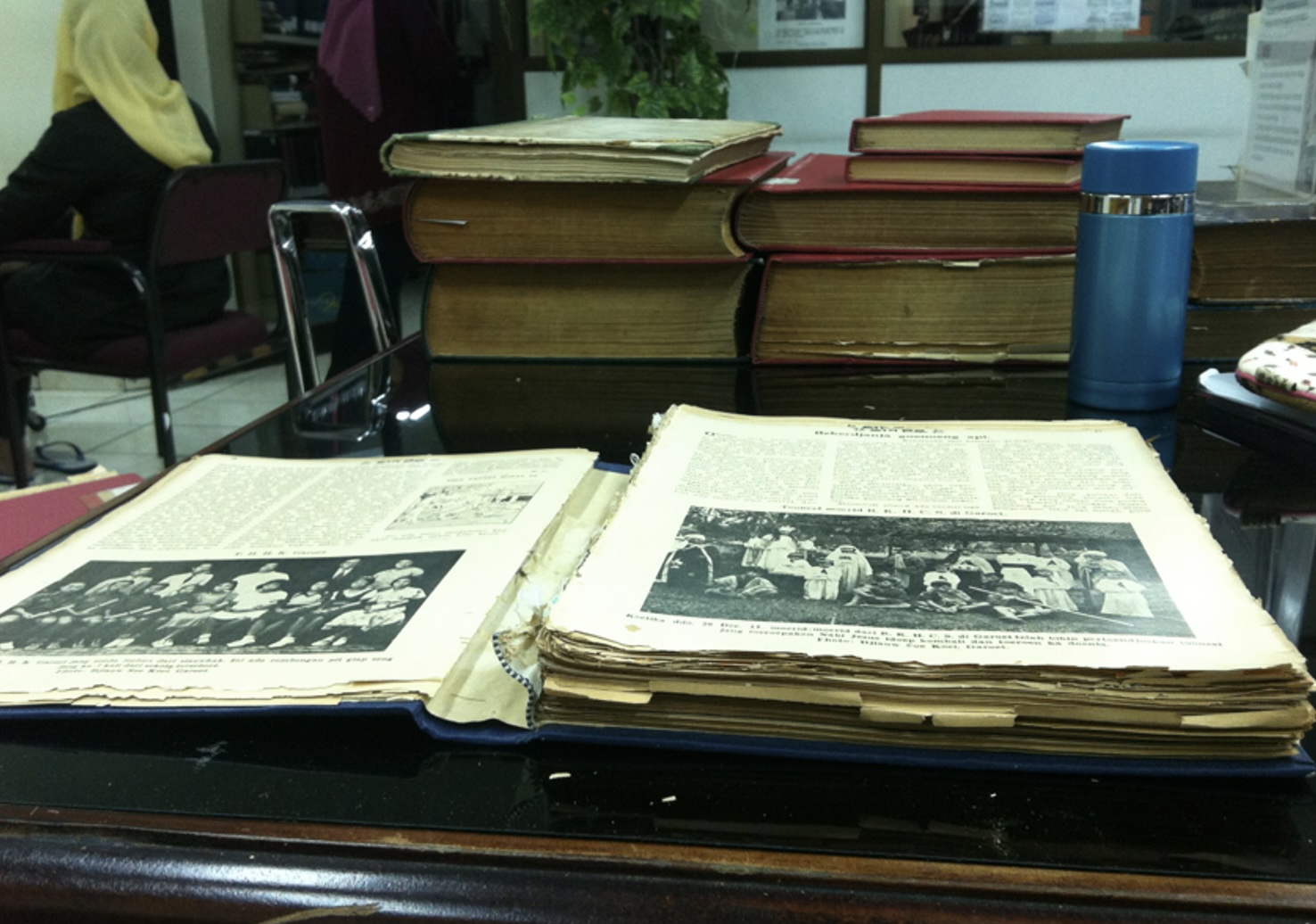
I have spent the last twenty-five years tracing Indonesian leftist women’s histories — and for much of that time, Api Kartini has been at the centre of my search. As an Indonesian researcher, getting direct access to the archive is itself a journey: locating every page of every edition, scattered across collections outside the country, feels less like archival research and more like an act of recovery.
My recent focus has been on women artists named in Api Kartini’s pages. For my thesis on Mia Bustam — the painter whose work was lost during her imprisonment — I found a crucial lead in an article by editor Sugiarti Siswadi, which revealed Mia’s long-held dream of a solo exhibition. That dream was finally realised last year at Biennale Jogja, based on my research. What made it possible was Mia’s own extraordinary act of resistance: unable to paint in prison, she wrote down everything she remembered in meticulous detail. That handwritten archive, kept today by her daughter Sri Nasti Rukmawati, is a record of someone refusing to be forgotten.
Api Kartini also led me to the only known article about Siti Halimah, a painter who disappeared entirely in 1965. If Saskia Wieringa once dismissed the magazine as middle-class reading matter, something interesting is happening now: it is young Indonesian women — perhaps themselves “middle-class” — who are returning to its pages to recover foremothers whose progressive thinking was deliberately buried. The archive is becoming a medium of transmission across generations.
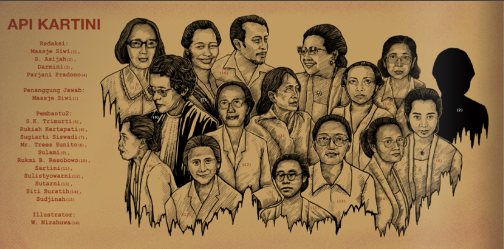
Working through Api Kartini’s articles on Vietnam has opened another set of questions: what did transnational solidarity actually look like between Southeast Asian women in this period, and why has it become so invisible to us now? I am currently interviewing Farida Ishaja, a student exile who studied history in Hanoi from 1964 and went on to live in Vietnam for twelve years, joining the war effort. I am trying to locate her in the archive at a specific moment: August 1965, when Farida returned to Jakarta as a translator accompanying a Vietnamese art delegation to meet Sukarno — just weeks before the purge. Farida is a living red thread connecting histories we have largely lost.
There is something particular about working with these materials — the way new information keeps surfacing, pulling the present into unexpected contact with the past. Each discovery feels less like filling a gap and more like catching a glimpse of something still in motion. These women’s lives feel simultaneously distant and emotionally close, and that tension — between the archival and the felt — is perhaps what keeps me going.
Nguyễn Thị Minh
As a scholar of literature and cinema working from a gendered perspective, I approach the lives of Sương Nguyệt Anh, Nguyễn Thị Minh Khai, Lê Thị Lựu, and other exiled or marginalized women not merely as historical figures, but as narrative formations – sites where power, memory, and discourse converge. My concern extends beyond what they did to how their lives have been narrated, by whom, and in the service of which ideological frameworks, and, crucially, how the stories articulated in their own writings and artworks enter into dialogue with competing or dominant discourses. It is precisely at this juncture that “herstory” emerges as a vital theoretical lens, enabling us to reconceptualize history as a polyphonic field in which gendered experience, affect, everyday life, and expressive practices beyond formal politics are acknowledged as constitutive of historical processes.
In the Vietnamese context, the distinctiveness of “herstory” lies in the complex intersection of three structural layers: Confucian patriarchy, French colonial rule, and nationalist and revolutionary discourse. Vietnamese women confronted not only a deeply entrenched gender hierarchy, but also the colonial state and, subsequently, the revolutionary nation-state. Consequently, “herstory” in Vietnam cannot be disentangled from questions of nationhood and liberation. Unlike certain Western contexts, where feminist movements could develop relatively independently of national struggles, in Vietnam women’s voices were frequently intertwined with the destiny of the nation, yet simultaneously subsumed or obscured by nationalist narratives.
Southeast Asian societies share histories of colonialism, war, and modern nation-building, yet each possesses distinct gender regimes and cultural traditions. Situating Vietnam alongside Indonesia and Malaysia – as this project has undertaken – and potentially extending comparison to the Philippines or Myanmar, enables the identification of both convergences and divergences in the ways women participated in journalism, artistic production, revolutionary movements, and state formation. In my view, future research should pursue three principal directions: (1) deeper archival engagement with overlooked or understudied texts by women; (2) the development of interdisciplinary methodologies that bring literature, cinema, visual art, and historiography into dialogue; and (3) the expansion of transnational conversations that reposition Southeast Asian women within regional and global intellectual and cultural networks.
Yvonne Low
Researching women artists across Southeast Asia has taught me that recovery and re-discovery are not the same thing — though I am still working out exactly where one ends and the other begins. Recovery implies something lost/forgotten/missing that can be “returned” (or reinstated through acknowledgement); perhaps one way of seeing this is to think about how a painting can be attributed or re-attributed. But so many of the women I have encountered were never simply “lost” or merely “forgotten”. They were actively marginalised by overlapping systems — colonial bureaucracies, nationalist cultural projects, Cold War purges — each of which operated according to its own logic of exclusion.
The life story of Mia Bustam is a case-in-point: her absence from Indonesian art history is not an oversight but the accumulated consequence of her gender, her socialist politics, and the way post-colonial Indonesia selectively honoured its own anti-colonial participants. In the context of disciplinary discourses, Mia Bustam (like others) leaves a void in the study of one’s art and practice for she has left no paintings behind. Lee Boon Ngan presents a different puzzle. She was affiliated with the Equator Art Society, whose disbanding under the Societies Act has made it easy to explain away the erasure of its members as collateral damage of anti-communist suppression. But I don’t think that fully accounts for her marginalisation — and sitting with that uncertainty feels important, because it resists the tidiness of a single explanatory framework. Relatedly, my research on Katharine Sim has opened up further thinking on overlapping erasures — and the inadequacy of “recovery” as a frame when the person in question was never fully recognised by the institutions — colonial, nationalist, disciplinary — that might have preserved (is preserved the correct word here?) her in the first place.
This brings me to the highly visible writings of Han Suyin. Her case poses a different kind of problem: not invisibility, but something closer to “disciplinary exile”. She was never lost; her novels and political commentaries circulated widely, and she remains recognisable in postcolonial literary studies. Yet she is largely absent from art historical accounts of the period, even as her writings offer some of the most sustained documentation of the social worlds and feminist socialist consciousness that shaped visual culture in Malaya and Singapore during the 1950s. Her visibility in one discipline has ironically (?) made her easier to overlook in another. To bracket Han Suyin from art history is to impoverish both. The socialist feminist frameworks circulated through publications like New Women’s Monthly — to which figures like Shen Zijiu contributed — shaped the political consciousness of artists, audiences, and organisers alike. The women artists within EAS did not arrive at their commitments in isolation, but as participants in a broader feminist socialist culture.
What troubles me, and what I keep returning to, is the question of method. These women did not operate in isolation. They moved — across cities, across colonial borders, across political movements — and their ideas travelled with them, through publications, networks, and solidarities that were genuinely transnational. And yet the tools we most commonly reach for in art history — for example, the monograph, the national survey, the single-artist exhibition — are poorly suited to capturing that mobility. They tend to fix women in place, in a particular national context or institutional affiliation, rather than tracing the geopolitical currents that shaped their consciousness and connected their struggles. I find myself asking: what would it look like to map these networks rather than just inventory their participants? How do we write histories that hold both the collective shape of a movement and the singularity of each woman’s story within it?
Jennifer Yang
When placing histories of exile as the subject of research, it becomes necessary also to take up a kind of exilic thinking as a method. I am thinking here of what Edward Said wrote in his essay, “Reflections on Exile”, about the task of an exile to refuse the status quo; to physically and intellectually destabilise borders, and those dogmatic constructs of nationhood, language, and home. This, for Said, is to move in contrapuntal rhythm—to exist outside of order.
You might imagine, then, that the task of inputting research data into a timeline for a project like this is not a straightforward one. A timeline, after all, involves placing identifiable events into some linear chronology; it requires one to order. We end up relying on those place names we readily assign to unfixed, porous geographies. But the vertical stratification of the timeline (into Vietnam, Indonesia, Malaya and Singapore) at least allows viewers to compare and navigate parallel happenings across geographical sites, even if they are once again subsumed within these national categories. And yet a figure like Khadijah Sidek interrupts the order of the timeline again and again. She crosses the bounds of the nation–Sidek was born in Sumatra, relocated to Singapore, and later exiled to Johor–as well as the bounds of ideology- her feminist activism took her across the party lines of the right-wing Malay nationalist UMNO and PAS, not to mention her involvements with Sumatran women’s paramilitary group Puteri Kesatria and the Indonesian and Malay Women’s Assembly (HIMWIM) in Malaya. Sidek cuts across that three-tiered timeline. I am still thinking about what modes of digital representation might account for these disorderly narratives of feminist movement, organising, and exile.
In my view, the most critical question raised in the process of putting together a digital timeline has been the matter of sourcing, storing, and displaying “exiled images”–as I affectionately think of them. Strewn across our lengthy email threads, offline cellphone photo stores, poorly scanned microfiche, out-of-print memoirs, and the internet, these are images which are often poor quality or orphaned. Indeed, the task of tracing the lives and movements of individuals who have been written out of history involves the recovery of images and records that have also been exiled. We cannot assume the permanency of an image or material archive. Even the ‘recovered’ versions of exiled images are haunted by their past loss. This estrangement is palpable, in the missing self-portrait of Mia Bustam–now viewable to us from a black-and-white photograph recovered by Marah Djibal–and in that pained request to dismember the pages of the women’s magazine Phụ nữ Tân tiến from the revolutionary Nguyễn Thị Minh Khai to fellow organiser Lý Ưng Thuận in 1933. The timeline asks us to address the exilic nature of such images–yes, even in the monotonous work of sourcing image credits–but it also offers us a format and space to host them. Their exilic qualities remain; I do not feel that it has been useful, or even possible, to try to restore these images. But it has felt important to gather them–acknowledge their existence in doing so–and to allow them to come into view.
Trần Hoàng Ngọc Thư
This project unearthed, for me, what seems like a small fraction of the life artist Lê Thị Lựu had lived. While I was able to partially trace some of the broader “milestones” in her artistic career, most of her life – in particular, the periods that exist outside of such milestones – still remain elusive. Tracing her life from multiple positions of distance, I combed through digitised materials in both Vietnamese and French, trying to grasp what lies beyond and in between her life in Vietnam and her unintended exile. I wished to reconcile her prior absence from the Vietnamese art historical canon (which took its time to incorporate even her male contemporaries from the EBAI), and the solo presentation of her works and personal memorabilia, now permanently on view at the Ho Chi Minh City Fine Arts Museum.
Her biographer Thuỵ Khuê, in Lê Thị Lựu: Ấn Tượng Hoàng Hôn (currently the only published monograph on the artist) continually returned to a quiet spirit of homesickness – to constantly look towards the home, and see it even within the most estranged circumstances – as something that persists in the paintings of Lê Thị Lựu. Indeed, outside of her paintings (where one can observe the faint outline of terraced fields amongst the French countryside landscape), this can be seen most clearly through her poems. With topics spanning from the longing for the taste of fish head stews to the memory of the stone bridge in her hometown in Bắc Ninh, northern Vietnam, the poems are encased and displayed in the central part of the exhibition, just a few steps beyond her biography and a timetable outlining the main events of her life. It seemed almost humorously out of place, I thought, as her poems were mostly written on small pieces of paper, likely torn from a larger page, and in her own words at the beginning of some of the stanzas, written in haste.
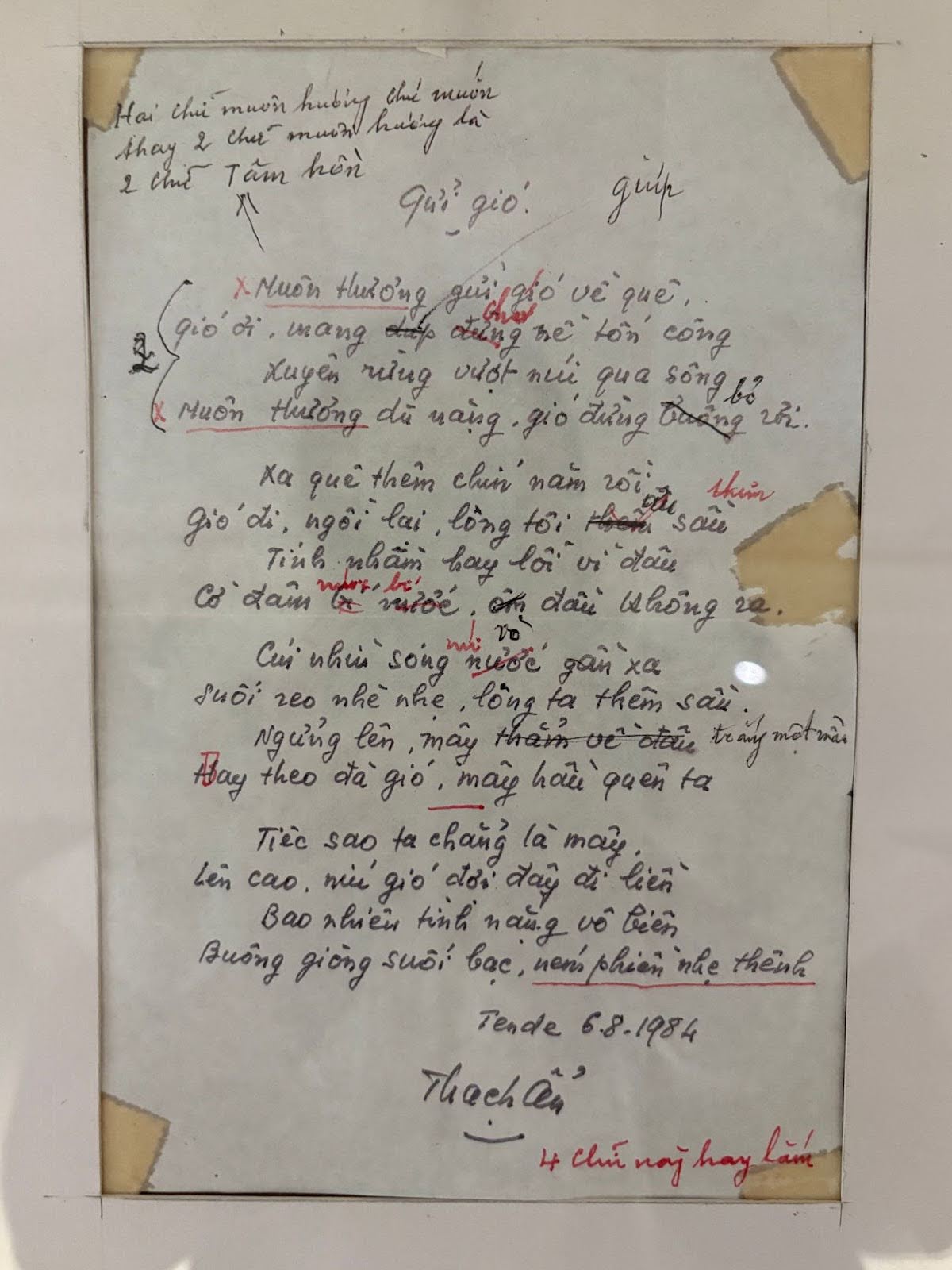
In my research into her lifework, as I perhaps prefer to think of it, homesickness as an affect – in the sentiments it carries, but more importantly, in its intentionality within living conditions where resistance must co-exist with, or take other forms – played an interesting role. As Sara Ahmed reminds us, ‘Emotions are crucial to the very constitution of the psychic and the social as objects […] Emotions produce the very surfaces and boundaries that allow all kinds of objects to be delineated.’ Alongside her active participation in the decolonial movement from overseas, which included being the Treasurer of the Union of Vietnamese People in France (which appeared to have persisted until the mid-1970s with a French newspaper entry of her attending a screening of Mai Trung Thứ’s film, hosted by the Union in Paris) and attending the 1946 Fountainbleau Conference, her feelings of homesickness articulated in her works perhaps offers a different window of interpretation for further readings.
At the same time, being able to establish the connection between feminist publications and networks which she was affiliated with (from Phụ Nữ Tân Văn which published a long profile on her immediately after her graduation from the EBAI in 1932; the various Vietnamese women’s journals which she submitted and published her illustrations in; to later the Union of Vietnamese People in France, and the Union of Women Painters, Sculptures and Engravers in France, which the extent of her involvement, aside from participating in exhibiting at the Salon in 1959 I currently know little about) hopefully expanded the parameters of the scholarship that currently exists on Lê Thị Lựu in linking her to the broader networks of solidarity and mobility that existed during her lifetime.
In time, I wish to further look at these alternative ‘windows’ to look at the lifework of Lê Thị Lựu, and this notion of overlapping erasures for example, is one which I feel is significantly overlooked for this case study. Various material facts are left unverified or unexamined which might play a role: the missing Phụ nữ gặt lúa (Woman harvesting rice crops) painting from the Ho Chi Minh City Fine Arts Museum, which she was convinced to donate in 1975; what happened during the 15-year period from the mid-1930s to 1950s, where she stopped painting completely; which of her paintings were brought back to Vietnam in 1946 for the group exhibition that celebrated the success of the August Revolution; and many more. This project has opened up the identification and possibility for such questions to circulate.